25 May 2026
World Cup 2026: What Scotland's Return Really Means
The World Cup 2026 is fast approaching, and the eyes of the football world are firmly fixed on the grand stage taking shape across North America. Canada, Mexico, and the United States will co-host what promises to be the most ambitious and competitive edition of the tournament in history. For the first time ever, 48 nations will compete, up from the previous 32-team format, bringing more matches, more upsets, and more stories than any World Cup before it. The expanded bracket gives smaller footballing nations a genuine shot at making their mark, and the group stage dynamics alone will be unlike anything the game has ever seen.
According to the bookmakers, the battle for the trophy will be fierce. Those interested in odds movements, tournament favorites, and potential dark horses can find out more by visiting popular betting platforms, which offer detailed coverage on the matter. As things stand, Spain, France, and England are widely considered favourites.
But none of that makes Scotland's presence on that stage any less significant. Quite the opposite! After 29 long years away from the world stage, Scotland has qualified, and for millions of fans across the country, that single fact carries a weight that no odds or rankings could ever capture.
The World Cup 2026 Qualification That Stopped a Nation
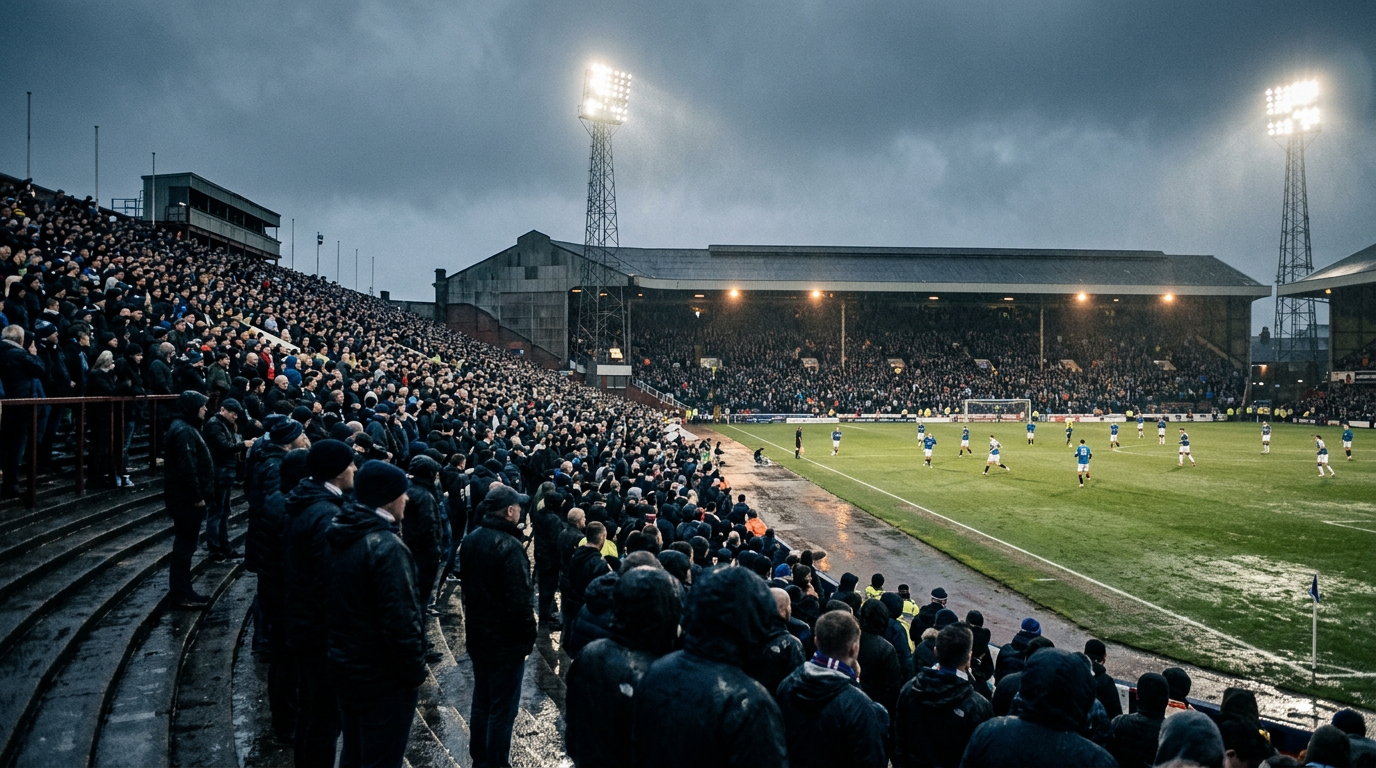
Scotland's route to the 2026 World Cup was not comfortable. Steve Clarke's side needed a win against Denmark in their final qualifying match at Hampden Park. What followed was one of the most dramatic evenings in recent Scottish football history. Scotland won 4-2 in a match that swung back and forth before a stunning goal from the halfway line sealed the result in the closing stages. The stadium erupted, supporters who had travelled from Aberdeen, Inverness, Edinburgh, and beyond celebrated together, and for a brief moment, the weight of nearly three decades of near-misses and heartbreak lifted.
Scott McTominay opened the scoring with an overhead bicycle kick inside the first three minutes. Denmark responded. Lawrence Shankland put Scotland back ahead. Denmark levelled again. With ten minutes left and the score at 2-2, the tension inside Hampden was almost unbearable. Then Scotland scored twice more, including a goal that will be replayed for years. Moments like that do not just win football matches. They become part of a country's collective memory.
Why 1998 Feels Like a Lifetime Ago
Scotland's last World Cup appearance was in France 1998. For context, that tournament took place before smartphones, before social media, before streaming, a genuinely different era in football and in everyday life.
Entire generations of Scottish fans have grown up never watching their national team compete at a World Cup. Children who were born the year Scotland last qualified are now approaching their thirties. That gap represents thousands of matches watched, hundreds of near-qualifications, and decades of hope that eventually hardened into something closer to resignation.
This qualification breaks that cycle. It tells a new generation that Scotland can compete on the biggest stage. It validates years of rebuilding under Clarke, who has gradually shifted the squad's mentality from survival to genuine ambition. The players who took the field against Denmark did not play like a team afraid to fail. They played with confidence and composure, and when things went against them, they responded. That character matters as much as the result itself.
A Nation Reacts… and Celebrates
The response across Scotland after the qualification was immediate and overwhelming. First Minister John Swinney described the performance as amazing and spirited. Fans who had been to the match spoke about it in terms usually reserved for once-in-a-lifetime events.
The reaction went beyond social media posts and pub celebrations. In the weeks following qualification, a national bank holiday on 15 June was proposed and later formally confirmed.
The holiday was met with debate across local councils, with some authorities adopting it and others citing cost concerns and pressure on essential services. But the very fact that a bank holiday was considered at all speaks to the significance of this moment for the country.
Scotland's Group C Fixtures: Dates, Opponents, and What to Expect
The draw has been made, the dates are set, and Scotland now know exactly what stands between them and the knockout rounds. Placed in Group C, the team will face Haiti on 14 June, Morocco on 20 June, and Brazil on 25 June.
Let's start with Brazil. The five-time world champions are the clear favourites to top Group C, and few serious analysts would bet against them doing exactly that. With their depth of talent, tournament pedigree, and the sheer weight of expectation that drives a Brazilian squad to perform, they are believed to perform at the highest level. Scotland's meeting with the Seleção on 25 June will be a spectacle, and Clarke's men will approach it with their organisation and defensive shape, but for Scotland, the real battle lies elsewhere.
Because the fight that will define Scotland's tournament is the one for second place, and all signs point to Morocco being the side they'll need to outperform. The Atlas Lions are no longer a romantic underdog story; they proved that emphatically at Qatar 2022, reaching the semi-finals and becoming the first African nation to do so.
They arrive in North America with belief, structure, and a seasoned squad. A second-place finish in Group C very likely comes down to what happens between Scotland and Morocco on 20 June, a match that carries the weight of an elimination game before the knockouts have even begun.
Scotland open their campaign against Haiti on 14 June, and while that fixture might look like the most straightforward on paper, nothing at a 48-team World Cup is comfortable. Underestimating any opponent at this level is a luxury no team can afford, and Clarke will demand a professional performance from the first whistle. Three points on day one would be transformative. It would shift the pressure squarely onto the Morocco game and give Scotland something to play for against Brazil beyond mere pride.
What the Expanded Tournament Means for Scotland's Chances
Under the old 32-team format, simply qualifying was often the ceiling of ambition for smaller nations. The 48-team structure changes that calculation. With three teams advancing from each of the 12 groups, the margin for error is slightly wider, and the path to the knockout rounds is more achievable than it has ever been.
Scotland will not arrive in North America as tournament favorites; nobody seriously expects that. But they arrive as a team with a genuine structure, recognisable quality, and enough belief to cause problems for anyone on their day.
Twenty-nine years is a long time to wait! When the tournament kicks off next summer, Scotland will step onto that stage carrying the hopes of a nation that never quite stopped believing. Whether they advance deep into the competition or exit after the group stage, the return itself is already meaningful.
Football has a way of defining moments that outlast scores and standings, and Scotland's qualification for the World Cup 2026 is exactly that kind of moment, one that will be talked about long after the final whistle blows in North America.
Odds and market references cited in this article reflect the general consensus among major bookmakers at the time of writing. Betting markets move continuously, and figures or odds may have changed.