30 June 2026
Why the Tartan Army are the World Cup's most loved travelling fans
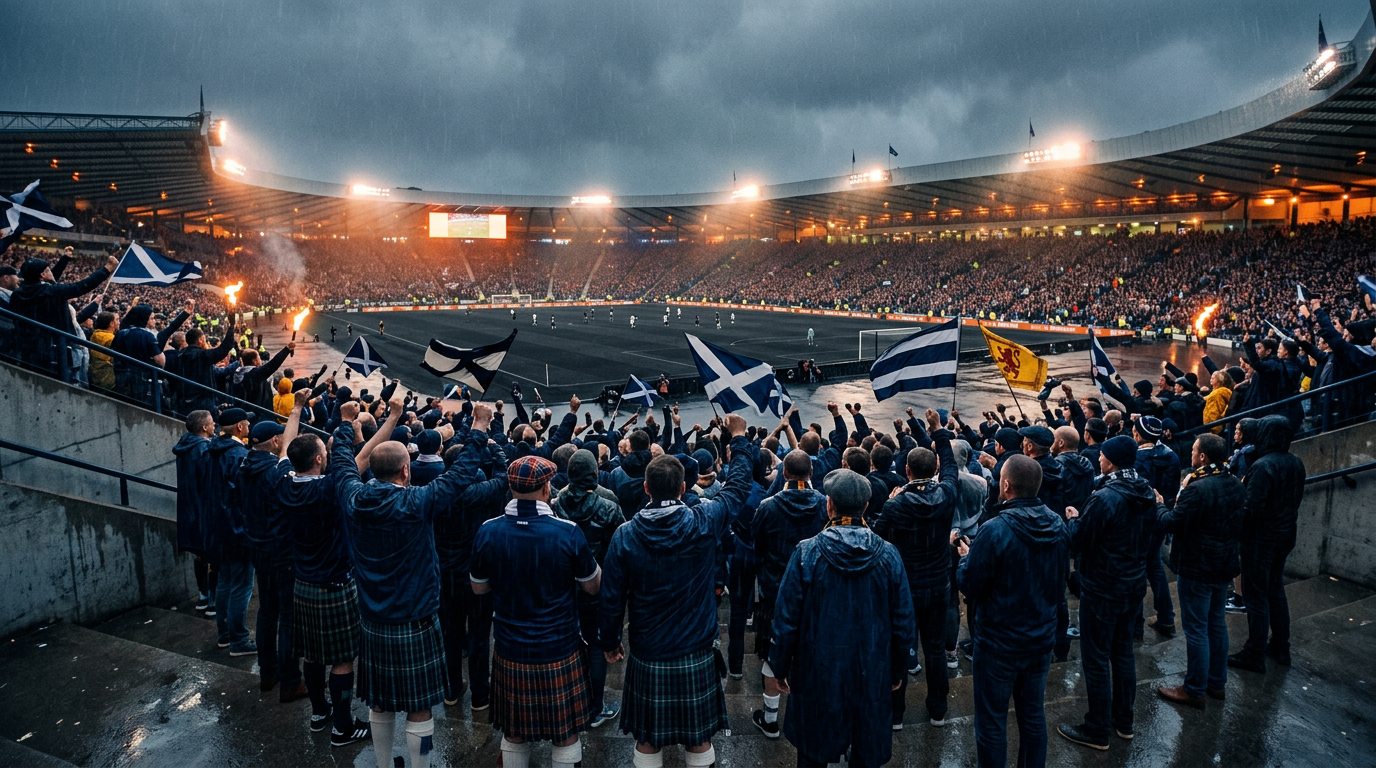
So far in the World Cup, there have been football fan groups (47, in fact), and then there has been the Tartan Army - the 48th. With dedicated love letters in the local Boston newspaper, Scotland’s return to the World Cup for the first time in 28 years has so far been defined by their supporters. They’ve managed to steal the show before the real story has even finished being written. And it happens every single time - for reasons beyond just kilts and bagpipes.
How the Tartan Army found its identity
The identity that Scotland fans are projecting and becoming known for has carried around the world for some time. And, perhaps unexpectedly, it’s been defined by some of the most painful exits in World Cup history.
Scotland remains the only nation to have been eliminated on goal difference at three consecutive World Cup tournaments (1974, 1978, 1982). They even went home from West Germany unbeaten, and they went home from Argentina having beaten the eventual finalists. They came oh-so-close again in Spain. And the fans kept showing up.
The Scotland Travel Club was formed in 1980 as a response to a spell of bad crowd behaviour at away games. They made a deliberate choice to be the opposite of what Scottish football had become associated with at its worst. No aggression. No wrecked venues. Just noise, colour, humour, and an open invitation to whoever was unfortunate enough to be hosting. Sometimes, self-fulfilling prophecies really do work, and this was an identity created and lived up to ever since.
Fair play champions
Euro 1992 in Sweden is really where it crystallised. Around 5,000 of the Scotland fans descended on a tournament their team had never previously even qualified for. Hotels were far too expensive for the working class Scots, so many fans pitched tents and camped in fields instead. One morning, the Scotland team bus drove past a site covered in Saltires and fan tents. Manager Andy Roxburgh asked the driver to pull in. He just had to say hello.
UEFA awarded the Tartan Army their Fair Play award for that tournament and the precedent was set. So when France 1998 arrived, it wasn’t a surprise when FIFA named them the competition's best supporters. While England fans were involved in serious trouble in Marseille, the Scots were being sent off by the city of Bordeaux via a full-page newspaper advertisement: "Come back soon. We miss you already." That line rather says it all, and Scots made a point of not being like the English fans, where trouble often followed them.
The culture that sets them apart
The Tartan Army doesn’t just follow Scotland, but football itself. Scotland didn't even qualify for Qatar 2022. Their fans went anyway. One Aberdeen fan had attended nine World Cups since 1982 but had only watched Scotland play in four of them. Turning up in Doha in a kilt and spending the month cheering on France, Brazil, the USA… Then being mobbed for photos by fans of every nationality. "If Scotland can't be there," he said, "why not watch the best?" There isn't really an equivalent of that in many football cultures. For the Tartan Army, the tournament is the destination. Scotland are the bonus. That’s the benefit of having low footballing expectations - a single win can feel massive.
For the many thousands watching from home right now, following Scotland's World Cup journey has been more about watching Instagram content about the fans than the football. With only 180 minutes played so far, there are far more minutes of Scots bringing some joy to local Bostonians, and our news covering their news about the fans. When the World Cup odds are against you, it’s easier to just enjoy the moment.
Stateside: The Tartan Army's greatest road trip yet
When Scotland beat Haiti 1-0 in Boston, the Gillette Stadium erupted, but it was the scenes the following day that really captured the hearts of the locals. The Tartan Army took over Fenway Park, the Red Sox welcomed them like old friends, and Craig Ferguson (who had walked over 3,000 miles from Los Angeles to Boston in a kilt to raise money for mental health charity SAMH) was greeted by thousands of fellow Scotland fans at Boston Common.
But it shouldn't surprise anyone, when at Euro 2024, more than 150,000 Scotland fans headed to Munich. North America in 2026 has that same energy, just a bit more spread out. Scotland's World Cup preparations have given the squad the best possible foundation, so now comes Brazil. They know they will have the support of the crowd.
The Tartan Army's reputation isn’t built on results, but turning up with a sense of warmth and self-deprecation. It’s about contributing to the festivities in a way that makes it better for everyone.