21 May 2026
The Club Bingo Night and What Happened When the Clubs Shut
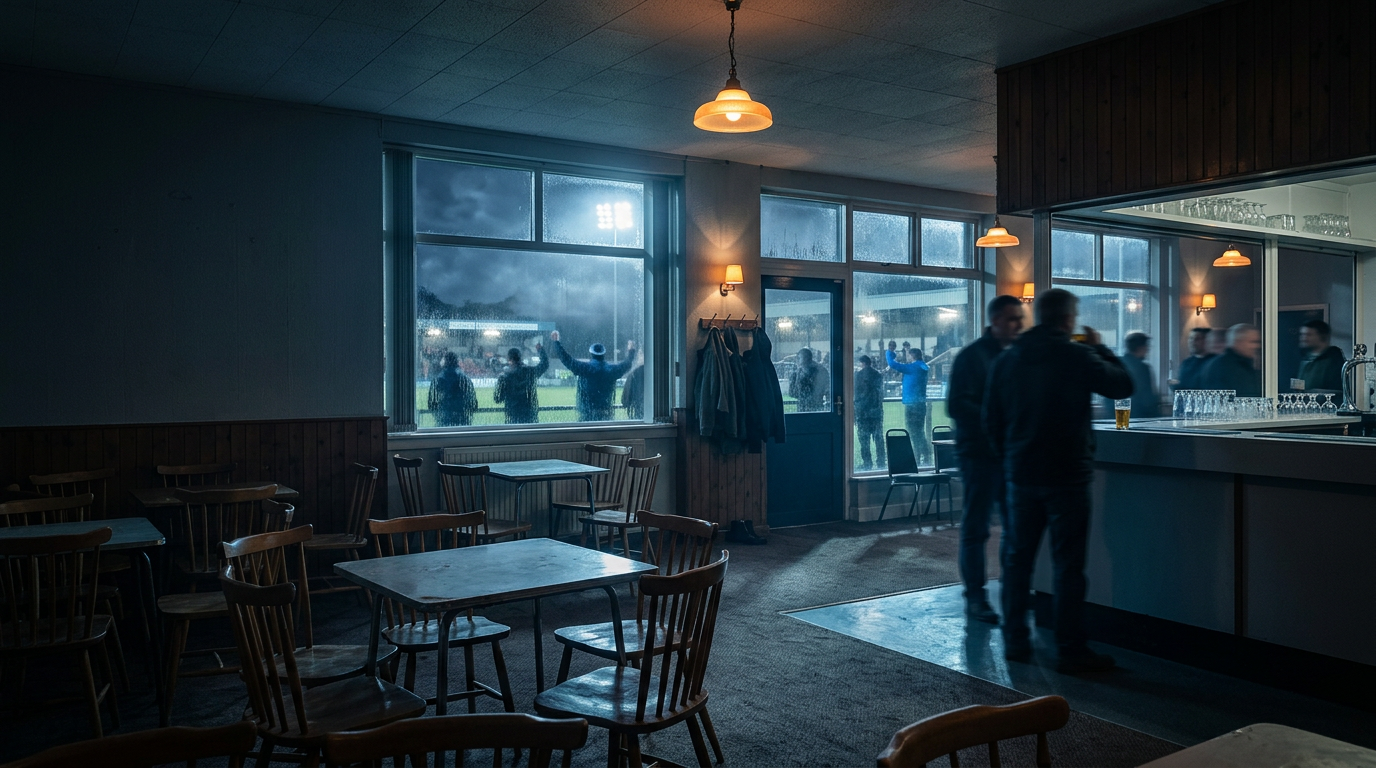
Most Scottish football supporters of a certain age have a memory of it somewhere. The supporters club function suite, or the Miners Welfare, or the social club attached to the junior ground. A Friday or a Sunday. The caller at the front with the microphone and the machine that pushed up the numbered balls. Somebody's auntie running the books. The committee man with the float in a biscuit tin. Bingo was woven through Scottish working-class social life, and a meaningful part of that life ran alongside the football.
A lot of those rooms are gone now. The clubs that hosted them have closed at a steady rate over the past two decades, and the bingo night went with the building. What is interesting, and slightly under-discussed, is where that particular thread went afterwards. It did not simply vanish. It moved, in much the way a lot of Scottish social habits have moved, and the place it moved to is not where most people would assume.
The Social Club as Football Infrastructure
It is easy to forget how much of the Scottish game was held up by the social club model. Junior clubs in particular ran on it. The bar takings, the function suite hires, the Sunday bingo, the race nights, the domino leagues. These were not peripheral fundraisers. For a lot of clubs below the senior level, the social side of the operation kept the football side solvent. The team on the park existed partly because the room next door was busy on a Friday night.
The supporters clubs operated on a similar logic. A senior club's organised support often had a physical home, a function room or a leased social space, and that space ran the same mix of activities. The bingo night was a regular fixture in that calendar, sitting alongside the away travel bookings and the player-of-the-year dance. It was social glue and revenue at the same time.
This is the context that gets lost when bingo is discussed purely as a gambling product. In the Scottish football setting it was rarely just gambling. It was a recurring reason for a particular group of people to be in the same room on a regular schedule, with the club as the thing they had in common.
Why the Buildings Closed
The decline of the social and working men's club in Scotland has been documented well enough that the broad causes are not in dispute. The Herald's coverage of the long decline of Scotland's working men's and miners' welfare clubs sets out the familiar pattern: changing drinking habits, the smoking ban, rising overheads, an ageing membership that was not being replaced, and the slow disappearance of the heavy industry whose workforce had built and sustained many of these institutions in the first place.
For the football clubs that depended on this model, the closures were not an abstract social trend. They were a direct financial problem. When the social club shut, the revenue it generated for the football operation shut with it, and a number of junior and lower-league clubs across Scotland felt that loss acutely through the 2000s and 2010s. The bingo night was a small line in that ledger, but it was a real one.
Where the Bingo Thread Went
The activity itself did not lose its audience when the rooms closed. The appetite for the particular rhythm of it, the half-social, half-distracted pattern of a bingo session, carried on. What changed was that the obvious physical place to do it disappeared, and a substantial part of the audience eventually reassembled online.
The online version preserved more of the social character than people tend to expect. Operators like Fruity King run the same 90-ball and 75-ball formats that ran in the club function suites, with hosted chat rooms alongside the game where regulars talk, recognise each other, and maintain the kind of low-key familiarity that the physical room used to provide. It is not a like-for-like replacement for the club night, and nobody serious would claim it is. But the part of the experience that was about regularity and company, rather than the building itself, did transfer across in a recognisable form.
This matters for the football connection because a fair proportion of the people who played bingo in the club function suites were there because of the club. The online version does not rebuild that link automatically. What it does is keep the activity alive for the people who valued it, including a lot of older supporters for whom the club night had been a fixed point in the week.
The Club Night Versus the Online Room
Aspect | The Club Function Suite | The Online Room |
|---|---|---|
Revenue beneficiary | The football club directly | A commercial operator, not the club |
Social contact | Face to face, same people weekly | Text chat, familiar names, hosted |
Accessibility | Required getting to the venue | Available from home at any hour |
Link to the club | Central; the club was the reason | Largely severed |
Schedule | Fixed nights, weekly rhythm | Continuous, player chooses |
Who it retained | Lost when the building closed | Re-reached a portion of the same people |
The honest reading of that table is mixed. The online room genuinely preserved the activity and a version of its social side, which is not nothing for the people who relied on it. But the column that matters most for a football audience is the one about who benefits from the money. In the club function suite, the takings went back into the football. Online, they do not. That is a real loss for the lower-league Scottish game, and it is worth naming plainly rather than glossing over.
The Wider Pattern in Scottish Football Culture
The bingo story is a small instance of something broader that has happened to Scottish football's social infrastructure. A lot of what used to hold the lower levels of the game together was physical and venue-based, and a lot of it has either closed or moved online over the same period. The supporters club with a leased function room has, in many cases, become a committee, a social media presence, and an occasional hired space for the big away trips. The domino league became a WhatsApp group. The Friday club night became, for some of the people who used to attend it, an app.
None of this is presented here as a tragedy or a triumph. It is just the actual shape of what happened. The thing supporters valued was usually the regularity and the company rather than the bricks, and when the bricks became unaffordable, the regularity and the company looked for somewhere else to live. Sometimes they found it. Sometimes they did not.
What is worth holding onto is the specific point about money. The social club model, for all its decline, recycled its revenue back into the local game. The activities that replaced it largely do not. For anyone who cares about the financial health of Scottish football below the senior level, that is the part of this story that actually deserves attention, more than any nostalgia about the caller and the biscuit tin.
A Note on Playing Sensibly
Online bingo is a commercial gambling product with a built-in house margin, and the friendliness of a good room does not change the underlying odds. Anyone playing regularly should set deposit and session limits in advance and treat any winnings as incidental. UK-licensed operators are required to provide these tools as standard.
BeGambleAware offers free, confidential support and information at begambleaware.org. The National Gambling Helpline operates 24 hours a day on 0808 8020 133. GamStop national self-exclusion is available at gamstop.co.uk and applies across all UK-licensed operators within 24 hours of registration.