10 August 2026
From the Terraces to the Physio Room: How Football Deals With Chronic Pain
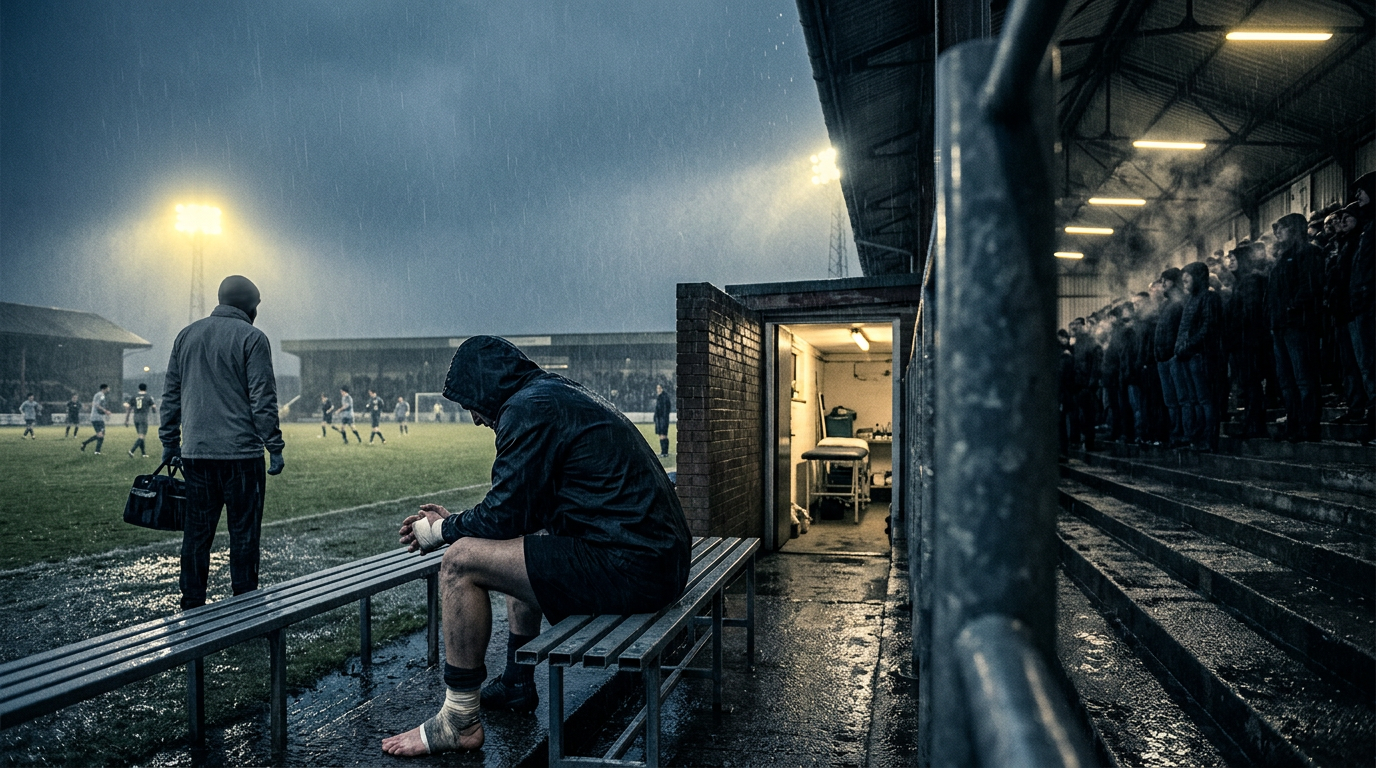
Ask any supporter over fifty who played to a decent level and you will get the same list. The knee that predicts rain. The back that stiffens on a cold away day in the stand. The ankle that never fully came back after a challenge in 1994.
Football produces chronic pain at a rate that would prompt an inquiry in most industries, and the sport has historically dealt with it by not discussing it much.
What "Playing Through It" Actually Costs
The culture is well documented and it starts young. Availability is valued above almost everything else, injuries get downplayed, and a player who reports pain repeatedly risks being labelled.
The consequence shows up two decades later. Studies of retired professionals consistently find higher rates of osteoarthritis, particularly in the knee, than in the general population, along with substantial rates of persistent pain affecting daily life rather than just sport.
That is not confined to the professional game. The same culture runs through junior football, amateur leagues and Sunday sides, where there is no medical staff at all and the incentive to carry on is exactly the same.
Where the Pain Comes From
Three mechanisms dominate, and they behave differently.
Acute injuries that healed imperfectly are the obvious category, particularly ligament and cartilage damage where the joint mechanics never fully normalise.
Cumulative loading is less visible and probably more significant. Decades of repeated impact through the same joints produces degenerative change that arrives without any single incident to point to.
And central sensitisation, where the nervous system becomes more responsive to pain signals over time, explains why some people continue to hurt long after the tissue has healed. That last mechanism is poorly understood by most people living with it, and understanding it changes how treatment is approached.
What Actually Helps
The evidence base for chronic musculoskeletal pain points somewhere unglamorous.
Graded exercise and strengthening does more than rest, which is counterintuitive to anyone whose instinct is to protect a painful joint. Weight management reduces load through lower limb joints. And pain education, meaning genuinely understanding the mechanism, has better evidence than most passive treatments.
Passive interventions, the ones done to you rather than by you, tend to produce short-term relief and limited long-term change. That does not make them worthless, since short-term relief has value, but it does mean they work best alongside active approaches rather than instead of them.
The Anti-Doping Line That Catches People Out
Any conversation about pain management in football has to address this directly, because it is a genuine career risk and it is widely misunderstood.
UK Anti-Doping's guidance on what is banned in sport explains that some substances are prohibited at all times and others only in-competition, with cannabinoids falling in the in-competition category alongside narcotics, glucocorticoids and stimulants. Pure cannabidiol is the exception and is not on the Prohibited List.
Two points follow. A prescription from a UK doctor does not exempt an athlete from the anti-doping rules. And an athlete needing an otherwise prohibited substance would require a Therapeutic Use Exemption obtained in advance, which is a formal process rather than a formality.
UKAD also advises athletes to tell all medical personnel that they must abide by anti-doping rules, which is the practical step most players skip. A prescriber who does not know you are tested cannot factor it in.
After the Whistle
For retired players and for the overwhelming majority of supporters who never played professionally, none of the above applies, and the treatment conversation is an ordinary clinical one.
That conversation has broadened since 2018, when cannabis-based products for medicinal use were rescheduled and became prescribable by specialist doctors. Access in practice runs almost entirely through private medical cannabis clinics, and eligibility generally depends on having tried conventional treatments without adequate result.
Whether that route is appropriate for any individual is a clinical question, not one an article can answer. This is general information and not medical advice, and it should be discussed with a qualified doctor alongside the better-established options.
The NHS Position, Plainly
There is persistent confusion about whether this is available on the NHS, and the honest answer disappoints a lot of people.
NHS prescriptions for cannabis-based medicines remain rare, confined largely to a small number of specific indications where national guidance supports them. For chronic pain in general, national guidance is cautious because the evidence base is still developing.
Explanations of Can you get medical cannabis on the NHS? set out where the boundary currently sits. The short version is that legality and availability are two different things, and the gap between them is where most of the frustration lives.
What Clubs Below the Top Level Could Do
Most Scottish football happens well below the level where a full-time medical department exists, and the practical improvements there are cheap.
Proper warm-ups rather than a lap and a stretch. Coaches who ask about pain rather than about availability. A policy that a player reporting a problem does not lose their place for it, which costs nothing and changes behaviour more than any equipment.
And a culture where the veteran with the bad knee is encouraged to see someone rather than congratulated for playing on. That reframing is free and it is the one with the longest payoff.
For the Supporter Reading This With a Sore Knee
If pain has been present for more than three months, it is chronic by definition and it deserves assessment rather than management by paracetamol and habit.
Start with a GP. Ask specifically about physiotherapy and about pain services, both of which exist and both of which are underused. And be sceptical of anything marketed as a cure, since chronic pain rarely resolves completely and the honest conversations are about function rather than elimination.