10 September 2026
Chances of winning with purchased bonus rounds in slot machines – the mathematical reality
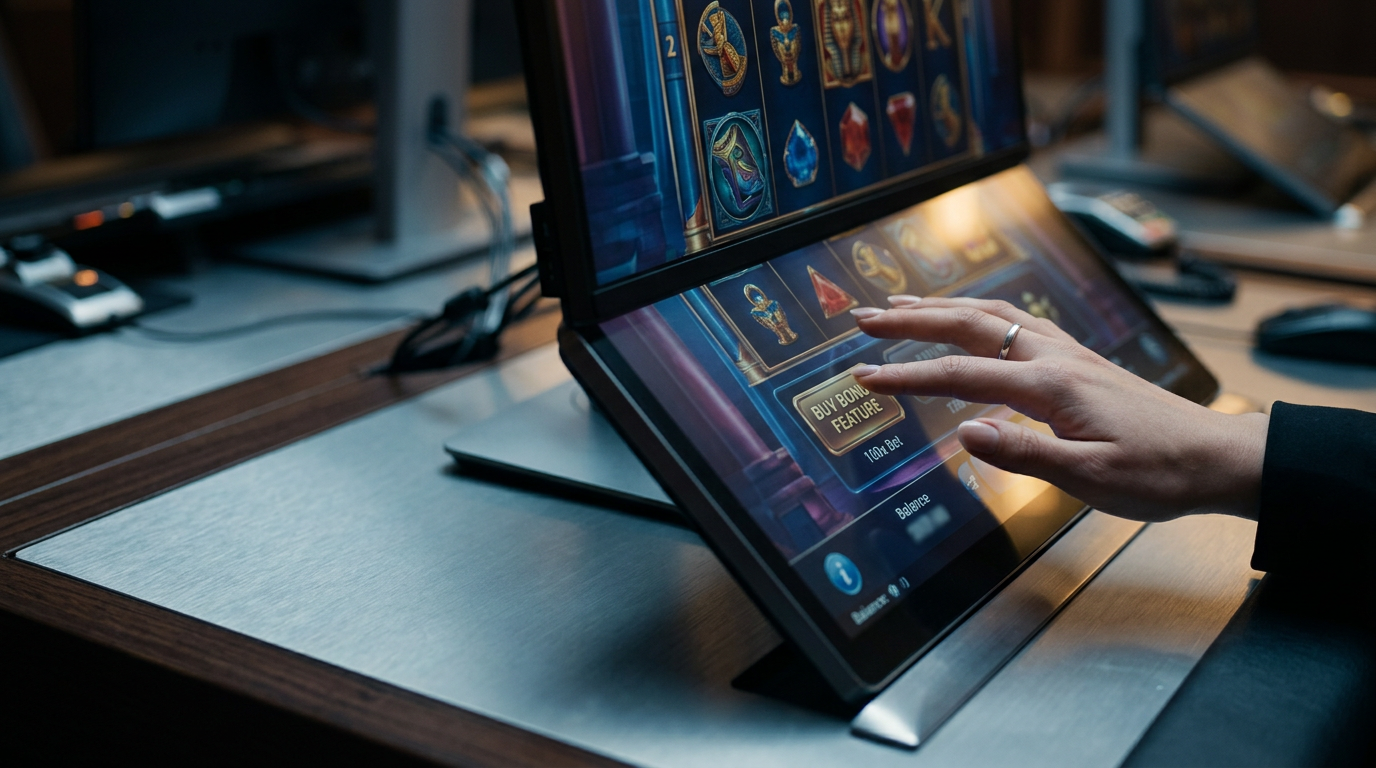
The Bonus Buy feature allows players to jump straight into the most lucrative phases of a slot – for a fee. Since 2026, manufacturers have been generating up to 45 per cent of their slot revenue from these purchases.
The mathematical reality behind purchased bonus rounds
Many players believe that purchased bonus rounds improve their chances of winning. The truth is: the RTP (Return to Player) remains constant.
At Britsino UK and established online casinos, the average payout rate does not change – whether the bonus is earned organically or purchased. A purchased bonus has exactly the same mathematical probability of winning as one triggered for free.
The volatility remains unchanged. A high-volatility slot remains high-volatility.
Feature | Organic bonus | Purchased bonus | Effect on RTP |
RTP rate | 96.5% | 96.5% | Identical |
Volatility | High | High | Unchanged |
Payout distribution | Standard | Standard | Equal |
House edge (casino) | 3.5% | 3.5% | Identical |
What’s changing: the cost structure. The casino markets the free bonus as a time-saver.
Psychological effects and the sense of control
The business model is based on psychological mechanisms, not on mathematical advantages. Players report an intensified sense of control when purchasing the bonus.
This illusion is emotionally compelling – but statistically, the odds do not improve.
This drives longer gaming sessions:
Immediate gratification rather than a waiting period
Perception of player control
FOMO effect during hot streaks
Justification for higher stakes
Repeat purchases following losses
Business model and market development
NetEnt, Pragmatic Play and Microgaming expanded their buy-bonus portfolios in 2026. The average fee is between 50 and 100 times the base stake.
With a €1 stake, this quickly amounts to €50–100. This revenue stabilises online casinos, particularly in markets with stricter stake limits.
The UK and Sweden introduced restrictions in 2025/2026. In many European countries, the practice remains unregulated.
Risks for players and long-term consequences
Purchased bonus rounds measurably alter gaming behaviour. Players who regularly purchase bonuses show higher loss rates and longer sessions.
Following losses, many players buy more bonus rounds – in the hopeful illusion that they can force a win. This is the ’tilt trap’.
Experts are warning of a new form of problem gambling. German gambling addiction research documented an 18 per cent increase in 2026 among players who primarily interact through bonus purchases.
Purchased bonus rounds alter neither the mathematical odds nor the RTP. They are a marketing tool with real psychological effects – but without any statistical advantage.
This feature saves time but incurs additional costs. The danger lies in psychological manipulation, not in the mechanics themselves.
Anyone who purchases bonus rounds should view this consciously as an entertainment expense – not as a strategic way to increase winnings.