24 August 2026
6 Costly Kit Mistakes Ruining Club Budgets
The six mistakes that quietly bleed a junior club's budget dry are ordering before the squad is settled, buying the same stock strip as neighbouring clubs, choosing a supplier who cannot reorder mid-season, printing sponsor logos from low-resolution files, forgetting goalkeeper and youth kit in the main order, and leaving no written spec on file for next year's committee.
Each one is avoidable. Most committees repeat all six, season after season, without ever joining the dots.
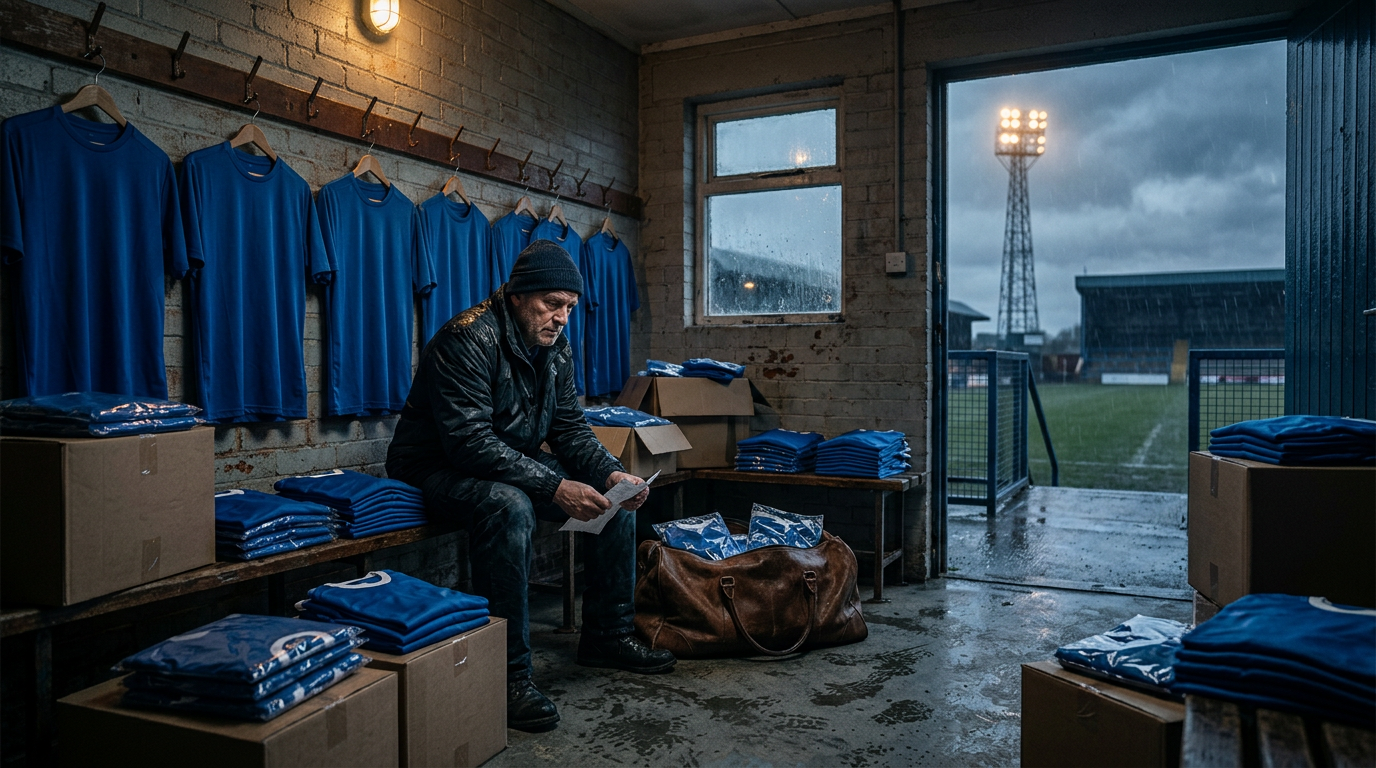
Picture the scene: a hot June evening after the AGM wraps, and the committee member places the strip order before anyone finds their car keys. The supplier acknowledgement email lands within the hour. By August, pre-season is only a fortnight away, replies have stopped, and he is composing his third chaser into the void.
1. Ordering Before the Squad Is Settled
The order goes in on an optimistic June squad list featuring sixteen names and numbers. By the time pre-season friendlies roll around, five of those players have signed elsewhere, and three more remain in negotiations dragging into late July. Those printed shirts are already paid for and completely non-transferable.
At typical regional prices of £35 per shirt, losing four kits to a bin bag before a ball is kicked means £140 is gone. Waiting until the registration window closes compresses the delivery timeline, but it eliminates the financial guesswork. The numbers on the page must match the registered players on the pitch before any payment leaves the club account.
2. Buying the Same Stock Strip as Neighbouring Clubs
Stock strips from a catalogue look reasonable on a spreadsheet because they offer lower upfront costs and rapid delivery. However, in a tight regional league, multiple clubs inevitably land on the exact same page. By October, home and away sides jog out in near-identical hoops, creating immediate on-pitch confusion.
This choice also ruins supporter merchandise potential and end-of-season resale value. Nobody pays £25 for a replica shirt that mirrors three other teams competing in the same postcode. Committees trying to build something recognisable lose ground every time they look at the matchday programme and see indistinguishable kits.
Key Insight: Clubs that avoid these six mistakes typically recover £300 to £600 per season, directly investing that into registration fees, training gear, or even a player. That’s preventable waste turned into competitive advantage. |
3. Choosing a Supplier Who Cannot Reorder Mid-Season
When October brings the third cup round, a harsh tackle often leaves a shirt torn beyond repair. A committee member emails the supplier for a replacement, only to discover a ten-unit minimum reorder policy. One torn shirt in October means a mismatched player until May.
The reply might explain that the colourway is discontinued or the original order file is missing, creating a long-running visual embarrassment. Sourcing custom soccer uniforms for teams from Sports Gear Swag ensures you are ordering from somewhere that can repeat the exact specification next season without requiring a ten-unit minimum.
Original designs must remain accessible, colourways must match perfectly, and single-item reorders must proceed without forcing the club into a full-kit commitment. Reliable suppliers maintain comprehensive order histories that allow for fast single-unit replacements on demand.
4. Printing Sponsor Logos from Low-Resolution Files
A sponsor often emails a JPEG pulled directly from their social media page, compressed twice over and sitting at a useless 72dpi. The committee member sends it straight to the printer without checking the file to meet a looming deadline. Nobody looks at a digital proof before the production run begins.
At presentation night, the backer sees their logo for the first time, pixelated and stretched across the chest. Explaining that distorted image while posing for the framed team photo usually costs the club next year's sponsorship deal.
At Scottish junior level, a shirt sponsor contributes £500 to £1,000. This is money the club cannot replace through Saturday morning fundraising alone. To avoid delays, requesting vector artwork or a 300 DPI PNG at print size keeps the timeline intact.
Choosing the correct application method prevents logos from peeling mid-season. Clubs should rely on screen printing for bold logos, embroidery for premium left-chest fleece items, and direct-to-garment processes for complex full-colour art or small runs.
Important: A low-res sponsor logo can cost next year’s deal. Always request vector artwork (AI or EPS) from the sponsor before printing; any professional business will have it. |
5. Forgetting Goalkeeper Kit and Youth Sides in the Main Order
The main order goes in for the first team on a Monday, and three weeks later the goalkeeper points out that he needs a different colour shirt. The training tops were meant to be in the same batch, and the youth section secretary sends a pointed email asking where their delivery is. Fragmenting the request means the club pays printing setup costs multiple times.
Each late addition triggers a new setup fee from the print shop. At junior level, setup fees of £20 to £40 per run are standard, creating a consistent drain on a budget that was already tight in February.
A single consolidated brief covering the first team, goalkeeper, training wear, and the under-16s carries just one setup charge. The internal coordination takes longer upfront, but submitting everything in one comprehensive document secures a repeatable saving.
6. Leaving No Written Record of the Specification
The committee member who placed the order leaves the club in January over a new job or a fallout from a penalty shootout defeat. The email thread holding every supplier detail, sizing chart, and hex colour code sits in a personal inbox that nobody else can access. Next June, a new volunteer starts the whole job again from nothing.
Two seasons of kit that do not quite match each other inevitably follow. Players notice the inconsistent fonts, and supporters notice the shifting shades of blue. Rebuilding the brief requires guessing which supplier produced the previous batch and what size chart they used.
Preventing this requires creating one shared document containing font names, supplier contacts, print methods, and the sizing chart used. Storing this information in a shared digital drive or a physical secretary folder ensures the next committee member inherits a clean operational slate.
The Bottom Line
Clubs that wait for registered squad lists, commission custom designs, secure high-resolution sponsor files, and consolidate their youth and goalkeeper orders recover hundreds of pounds across a season. Maintaining a written specification record and partnering with a supplier capable of matching single-unit replacements mid-season stops the financial bleeding entirely.
That recovered budget represents concrete resources on the pitch. The clubs getting this administrative process right are the ones spending the savings on players, rather than wasting funds on duplicate print fees and unwearable jerseys.
Author Profile: Sports Gear Swag is the leading online retailer of custom sports apparel and gear for teams, schools, and organisations of all sizes. Specialising in team jerseys, uniforms and athletic apparel with a wide range of customisation options. |